
Lake houses & sloping lots
Lake Lanier home inspections
Believe me, I get it. Lake Lanier is my family’s favorite part of North Georgia. But you’re hiring me to look past the view, so let’s see how the house, the lot and the dock are really holding up.
Prefer to call? (678) 941‑6781



The dock
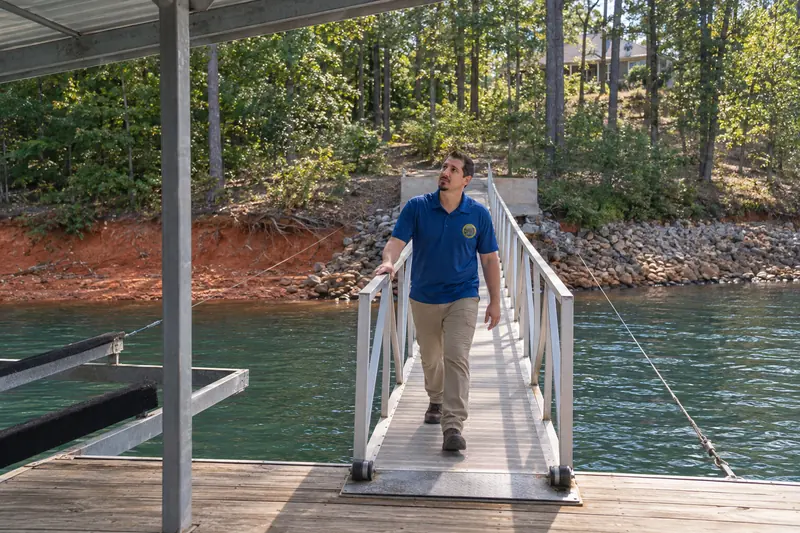
Does a home inspection cover the dock? Here’s what I check.
Technically, a dock is outside the scope of a home inspection. But it’s the question lake buyers ask me most, so when the dock is safe and accessible, I walk it and tell you what I see. I don’t dive; I don’t go into the water to see the supports underneath. But I definitely walk to the dock.
When I walk the dock, I check
- the path and walkway down to the water
- the gangway, and how the dock sits and floats
- the dock itself as I walk it, including any upper deck
- the lights and power I can see
Outside my inspection, and who to call
- anything below the waterline: a dock builder or diver
- a full boat-lift evaluation, or shoreline work such as seawalls or rip-rap: a dock or marine specialist
- certifying the dock’s electrical service: a licensed electrician
- a septic system or a well: a septic or well professional
- property lines and the shoreline boundary: a surveyor
With the owner’s written OK, I may be able to check more; ask me about it when you get in touch.
One buyer to-do: the dock permit. The U.S. Army Corps of Engineers manages Lanier’s shoreline, and its dock permits don’t transfer with the house: a new owner applies in their own name, with a licensed electrician’s certification of the dock’s electrical service, so sort it out during due diligence (and if there’s no dock today, don’t assume you can add one). Your agent or closing attorney can help; it isn’t part of the inspection.
The house & its lot
Fall for the view. Then check what’s under it.
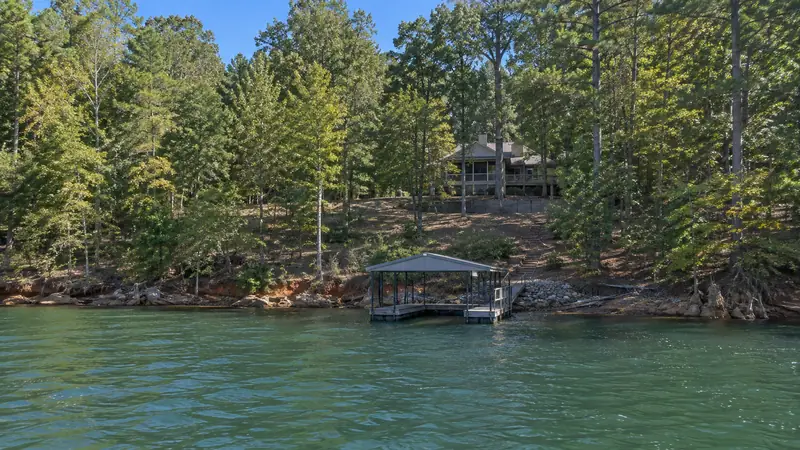
Lake lots usually slope, and water always runs downhill. So along with the roof, structure, plumbing, electrical and heating and cooling, I look hard at how the lot handles water: grading and drainage, retaining walls, the driveway, the decks and stairs that tie the house to the hillside, and any sign of moisture in the basement or crawl space. My drone helps with tall or steep roofs when the weather allows.
What the showings missed. At a 1993 house in north Gainesville, near the lake, my buyers had toured the house many times. None of those visits showed what the driveway was doing. It sloped toward a retaining wall, away from the house, and it was settling: cracked, separating in spots and moving. There was no drainage, so runoff was washing the soil away and taking the driveway with it. Some things are typical to see, some cracks maybe. But this was excessive.
My report described what I saw and recommended that a qualified contractor evaluate the settlement and make repairs, and that drainage improvements be considered. The buyers used it to negotiate with the seller. Another Hall County example: the crawl space that didn’t match its paperwork.
Wooded lots
Wooded lake lots: what the trees do to siding and roofs.
Lake homes on wooded lots have a lot in common with cabins in the woods, and the same few issues come up again and again. On houses with lots of wood siding, carpenter bees bore in, and woodpeckers hunting them can tear the siding open, sometimes right through to the inside.
In my experience, roofs under heavy tree cover often have moss, damaged shingles or leaks. So I check them three ways: from above when it’s safe, from the ground along the eaves and fascia, and from inside the attic.
Buying from afar
Buying from out of town? I’ll be your eyes.
Not local? Your agent can arrange access, and your report has photos and plain explanations of everything I found. Afterward, I’ll walk you through it by phone, and you can text me with questions after the report. Here’s how inspection day works →
“As we were not in the area when the inspection took place, solid communications were essential -- and George kept us informed all throughout the process.”
B Gaskill · Google review · Out of the area during the inspection Read the reviews on Google
Questions
Lake Lanier questions.
Which parts of the lake do you cover?
Lake homes around Lanier, from Buford and Cumming to Gainesville and Dawsonville. I’m based in Flowery Branch, right on the lake.
Do you inspect boat lifts and seawalls?
Not as part of the home inspection. Anything underwater is a job for a dock builder or diver, and a full boat-lift evaluation or shoreline work such as seawalls or rip-rap is one for a dock or marine specialist. I walk an accessible dock and tell you what I see, and with the owner’s written OK I may be able to check more; ask me about it when you get in touch.
Is the house on a well, or on septic?
A lake address doesn’t tell you. Ask the seller early: wells and septic systems need their own specialist evaluations, and you’ll want time for them within your due diligence. On sewer? A sewer scope shows the buried line.
What else is worth adding for a lake home?
Radon testing, which EPA recommends for every home, and mold testing for a lower level with a history of moisture.
Do you inspect homes on other lakes?
Yes. I also inspect lake homes in the mountains around Hiawassee, on the Georgia side, and anywhere else within about an hour and a half of Flowery Branch. Find your town →
Next step
When do you need your inspection?
 Eyes open, not fingers crossed. — George
What happens next
Tell me the property address and when you need the inspection.
I confirm the date, time and price with you.
I inspect the home myself. If you can join me at the end, I’ll walk you through what I found.
I send your home inspection report, with photos, within 24 hours of the inspection. Questions afterward? Text me.
You’ll know the price before you sign anything.