
Metro Atlanta · the northern suburbs
Home inspections in Atlanta’s northern suburbs
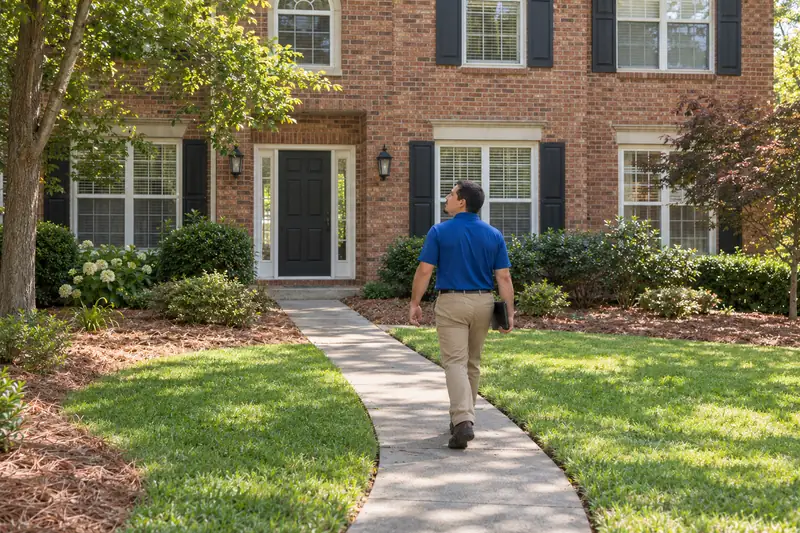
Buying in Alpharetta, Roswell, Marietta or elsewhere north of the city? I’m George Karampoulis, a Certified Master Inspector based in Flowery Branch. I do every inspection myself, across Atlanta’s northern suburbs, and many of my clients here come to me through their agent.
Prefer to call? (678) 941‑6781


Where I inspect
From Alpharetta and Roswell to Marietta and Woodstock.
I inspect across north Fulton, from Sandy Springs and Roswell up through Alpharetta, Johns Creek and Milton; in Cobb, from Marietta and East Cobb to Kennesaw; in Dunwoody; and up I-575 to Woodstock. I also inspect in Atlanta and Decatur, and anywhere else within about an hour and a half of Flowery Branch. Find your town →
Referred by your agent and checking me out first? Here’s how it works: I inspect the home myself, walk you through what I found if you can join me at the end, and send your photo report within 24 hours. I share it with your agent only with your permission. See how I explain findings →
“…referred to us by our realtor, Rip Pruitt. George was very kind and professional! he was very thorough with our home inspection and took his time explaining each area/issue he observed.”
Celine Jao · Google review · Buying in the Atlanta area, referred by her agent Read the reviews on Google
Established homes
Many north Fulton homes date from the ’80s and ’90s.
Roswell’s 2012 economic development plan counts more than 14,000 single-family houses built in Roswell in the 1980s and 1990s, while growth spread up Georgia 400 into Alpharetta, Johns Creek and Milton. Johns Creek’s comprehensive plan says 75% of its houses were built between 1980 and 2000.
In a home built in those decades, the roof, the water heater and the heating and cooling equipment may be original, or may have been replaced, some more than once, and the kitchen, bathrooms or basement may have been redone. Ask the seller early for dates, receipts and any permits, and I’ll tell you what the house itself shows.
- Remodels. New finishes don’t show the condition of what’s behind them, so I look hard at the electrical panel, the attic, and the plumbing and mechanical equipment I can reach.
- Polybutylene pipe. This plastic water-supply pipe, usually gray, was made from 1978 to the mid-1990s and has a history of leaks. I look at the supply pipes wherever they’re exposed, at the water heater, under sinks and in an unfinished basement, and I’ll tell you if I see it.
- Tall, steep roofs. My drone helps with a two-story roof when the weather allows.
“He came highly recommended by our realtor … and worked diligently for 4 hours - looking above the house with drone footage, ground-level and outside all around the home …”
Aleja Seabron · Google review · Home buyer, recommended by her agent Read the reviews on Google
Basements, slopes & decks
Finished basements, sloping lots and more than one system.
Bigger homes take longer, and I plan the time they need. When you reach out, tell me about any finished basement or addition, and how many heating and cooling systems the house has.
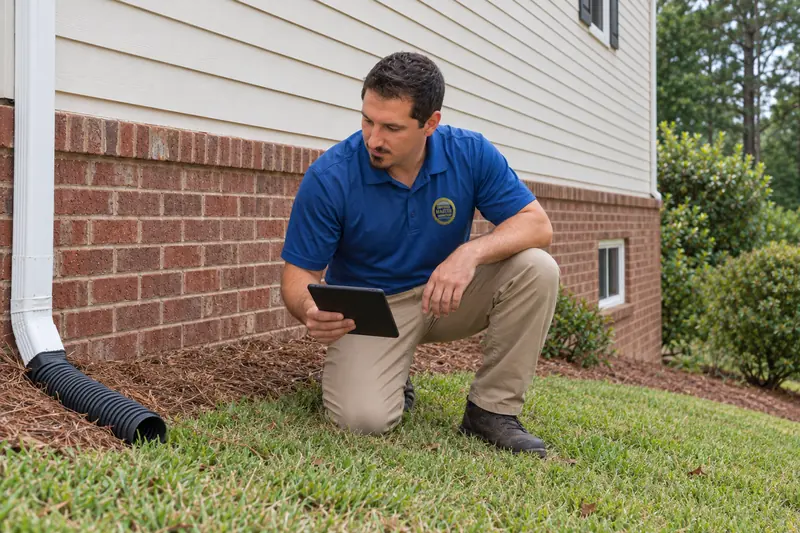
- Finished basements. Drywall and carpet hide the foundation walls and framing, so I read the clues around them: the grading and gutters outside, stains or damage at the base of the walls, the sump pump if there is one, and my moisture meter wherever something looks off.
- Sloping lots. On a slope, runoff from uphill can reach the house. I look at how the grading, drainage and any retaining walls may affect the house; soil stability and slope engineering are for a geotechnical engineer.
- Decks off the main floor. A deck on tall posts gets a hands-on check: the ledger where it attaches to the house and its flashing, where they can be seen, the posts and bracing, the stairs and the railings.
- Two or three systems. Each heating and cooling system I can reach gets its own look, and I run it on its normal controls when it’s safe to.
Sewer or septic
On public sewer or septic? Find out early.
Not every home here is on public sewer. In Milton, for example, the city itself provides no water or sewer service: homes get it from Fulton County or privately, and some lots have a well or a septic system. Ask the seller which the house has.
- On public sewer: at least part of the pipe from the house to the sewer main (the service lateral) belongs to the owner. Fulton County says owners pay for repairs to their sewer service lateral, including work within a public road right-of-way or a sewer easement, and puts it plainly: “Many homeowners aren’t aware that they own their service lines.” Other systems draw the line in other places, so ask the water system. A sewer scope puts a camera inside the line, with video and written findings.
- On septic: I don’t inspect septic systems. Ask the seller for the permit and pumping records, and have a septic contractor certified by the Georgia Department of Public Health evaluate it.
Radon
Fulton, Cobb and DeKalb are radon Zone 1. Test the house you’re buying.
EPA puts Fulton, Cobb and DeKalb counties in radon Zone 1, its highest-potential zone; Cherokee, around Woodstock, is Zone 2. That describes the county, not your house. In UGA Extension’s records of tests from 1990 to 2024, about one in six Fulton County tests (3,472 of 21,612) and one in seven Cobb County tests (1,891 of 13,788) came back at or above EPA’s action level of 4 pCi/L. Those tests were done by people who chose to test their homes, not a random sample, and only a test in your house can tell you your number. EPA recommends testing every home.
A radon test runs at least 48 hours, so start it early in your due diligence. Radon testing →
Questions
Questions from north of Atlanta.
Do you really come down to Alpharetta, Roswell and Marietta?
Yes, often, and to the rest of the northern suburbs. It’s the same inspector and the same 24-hour report. Find your town →
My agent referred me. What should I send you?
The listing and your due-diligence deadline. Text them to me or use the Schedule button, and mention any finished basement, addition or extra heating and cooling system, so I can plan the time the house needs.
Do you inspect in Atlanta and Decatur too?
Yes. I inspect in-town homes as well as the suburbs. See all the areas I cover →
How long does an inspection take on a bigger house?
Most inspections take two to four hours. A bigger house with a finished basement and more than one heating and cooling system can take longer, and I plan the time it needs. Come for the end if you can, and I’ll walk you through what I found. What to expect →
Do you inspect pools?
Yes. Pool and spa inspections → Planning to add a pool? In Milton, a pool permit on a lot with a septic system or a well needs approval from the Fulton County Environmental Health Department, so check before you count on one.
Buying a new build?
I inspect new homes before drywall, before the final walk-through and closing, and before the builder’s warranty runs out. Check the builder’s written warranty for its deadlines. New construction inspections →
Can you arrange a termite letter here?
Termite letters aren’t available everywhere I inspect. Text me the address and I’ll tell you. About termite letters →
Sources
- City of Roswell: Strategic Economic Development Plan (2012), p. 1-1
- City of Johns Creek: comprehensive plan, city profile (p. 16)
- InterNACHI: polybutylene piping
- InterNACHI: Standards of Practice
- City of Milton: water, sewer and septic information
- City of Milton: pool permits
- Fulton County Public Works: water and sewer service laterals
- EPA: map of radon zones
- UGA Extension: Georgia radon map (recorded tests by county, 1990–2024)
Next step
When do you need your inspection?
 Eyes open, not fingers crossed. — George
What happens next
Tell me the property address and when you need the inspection.
I confirm the date, time and price with you.
I inspect the home myself. If you can join me at the end, I’ll walk you through what I found.
I send your home inspection report, with photos, within 24 hours of the inspection. Questions afterward? Text me.
You’ll know the price before you sign anything.